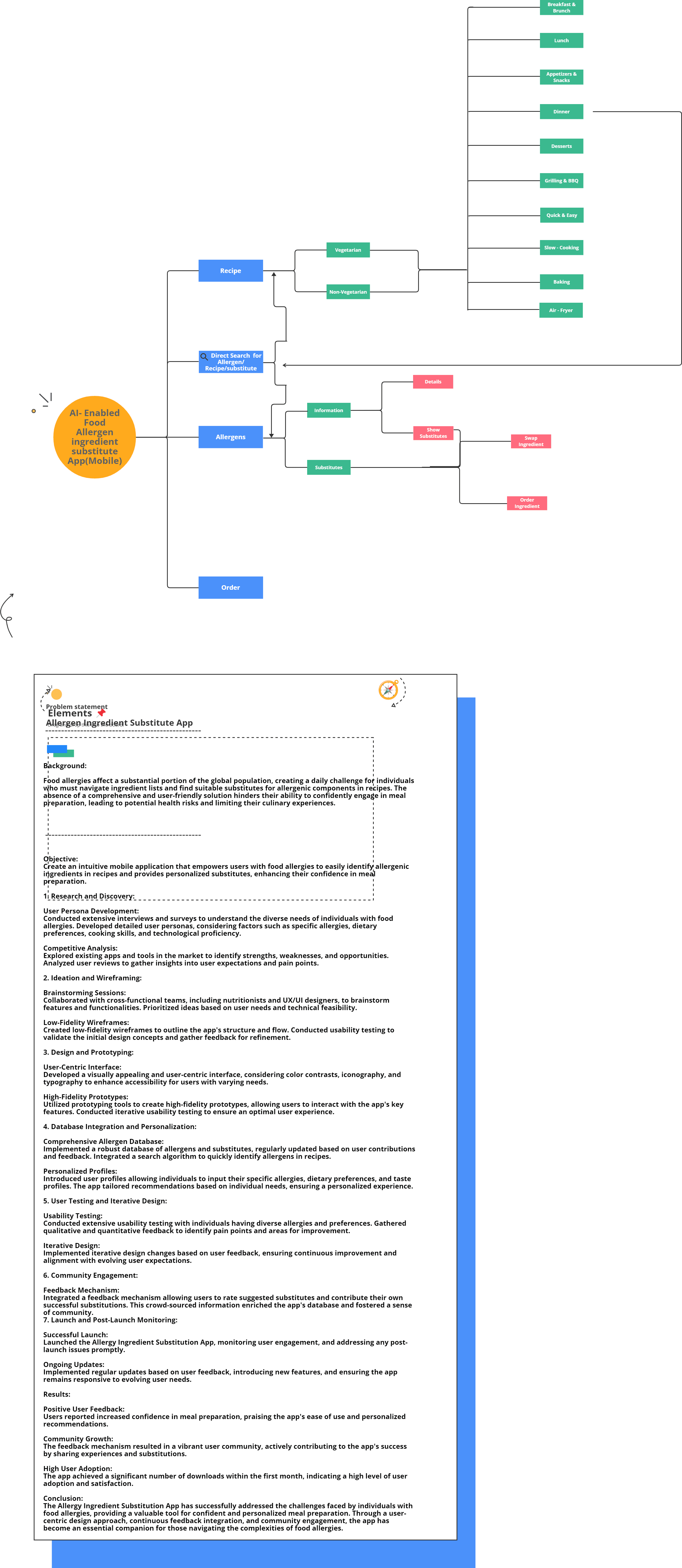
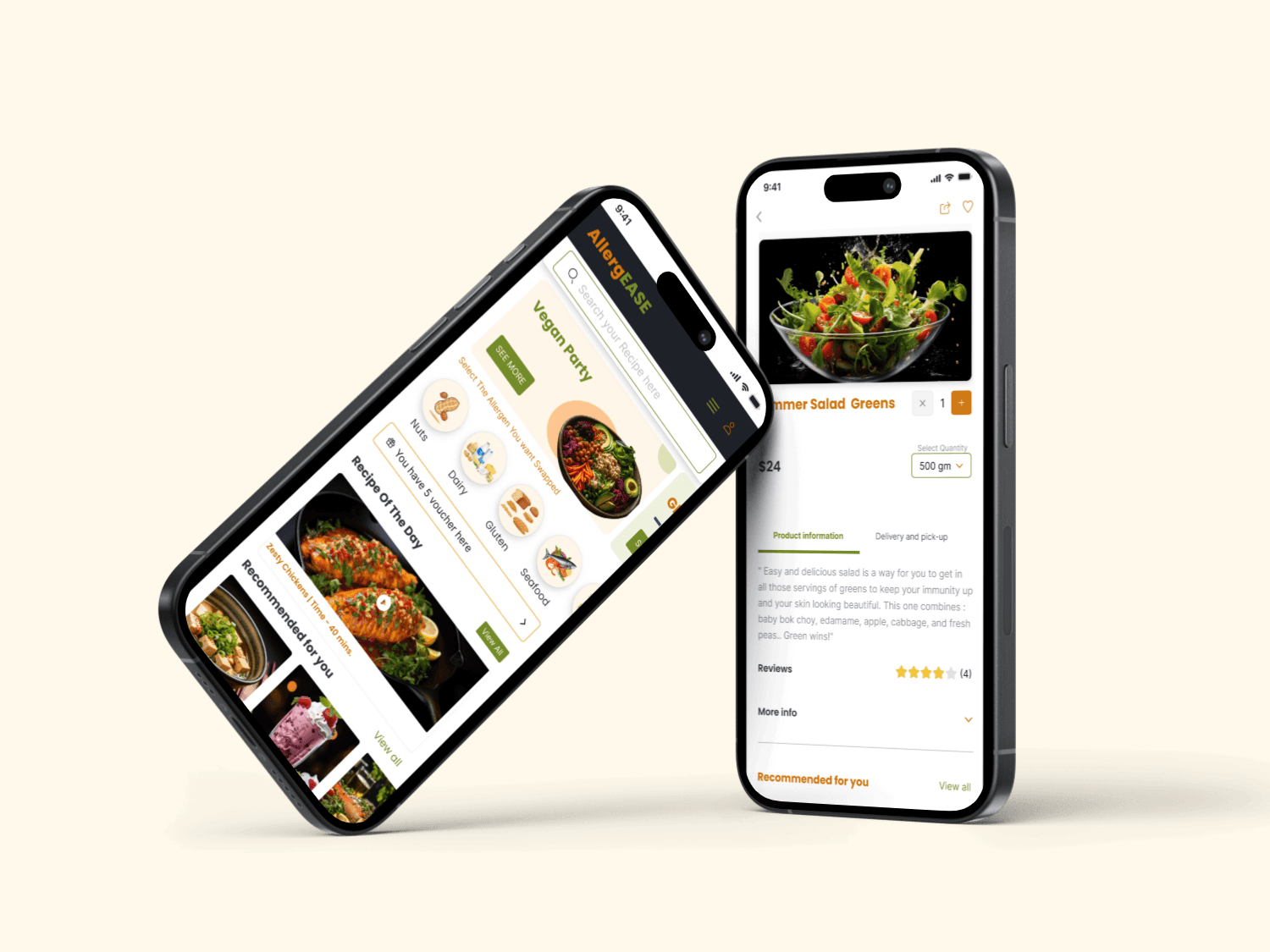
Design an intuitive, AI-powered mobile app that helps users with food allergies identify risks and discover safe substitutes with confidence.
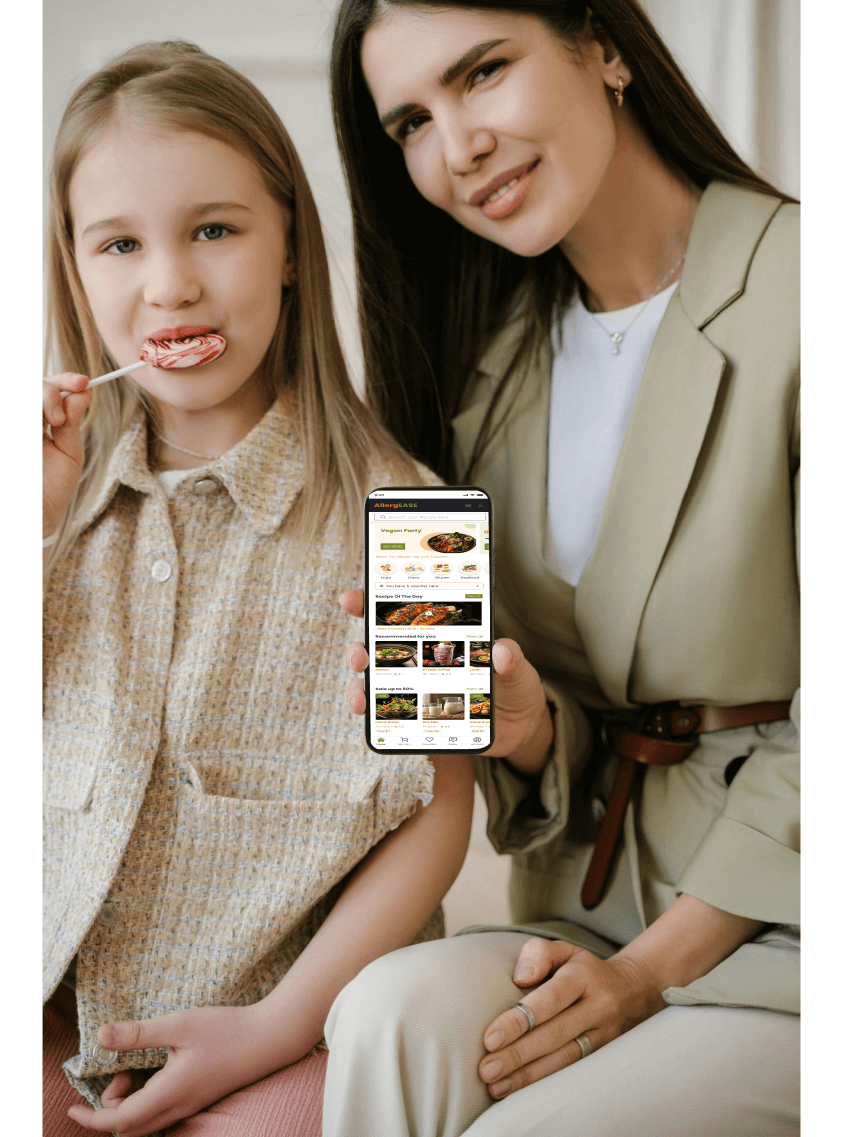
The development of an Allergen Ingredient Substitute App presents an opportunity to address these challenges comprehensively. By creating an intuitive, personalized, and community-driven platform, we aim to empower individuals with food allergies to confidently navigate their dietary choices, fostering a sense of community and enhancing their overall culinary experiences.
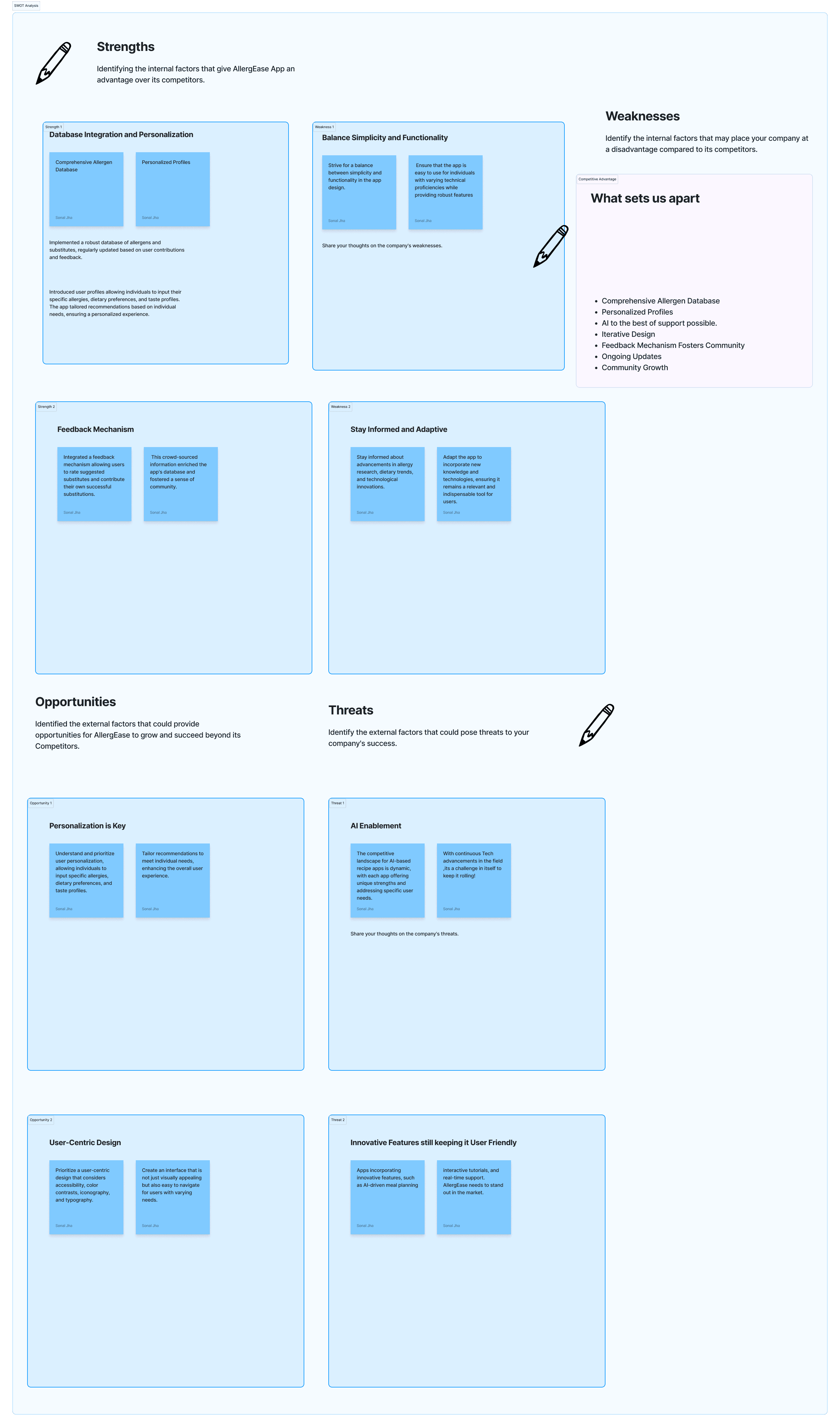
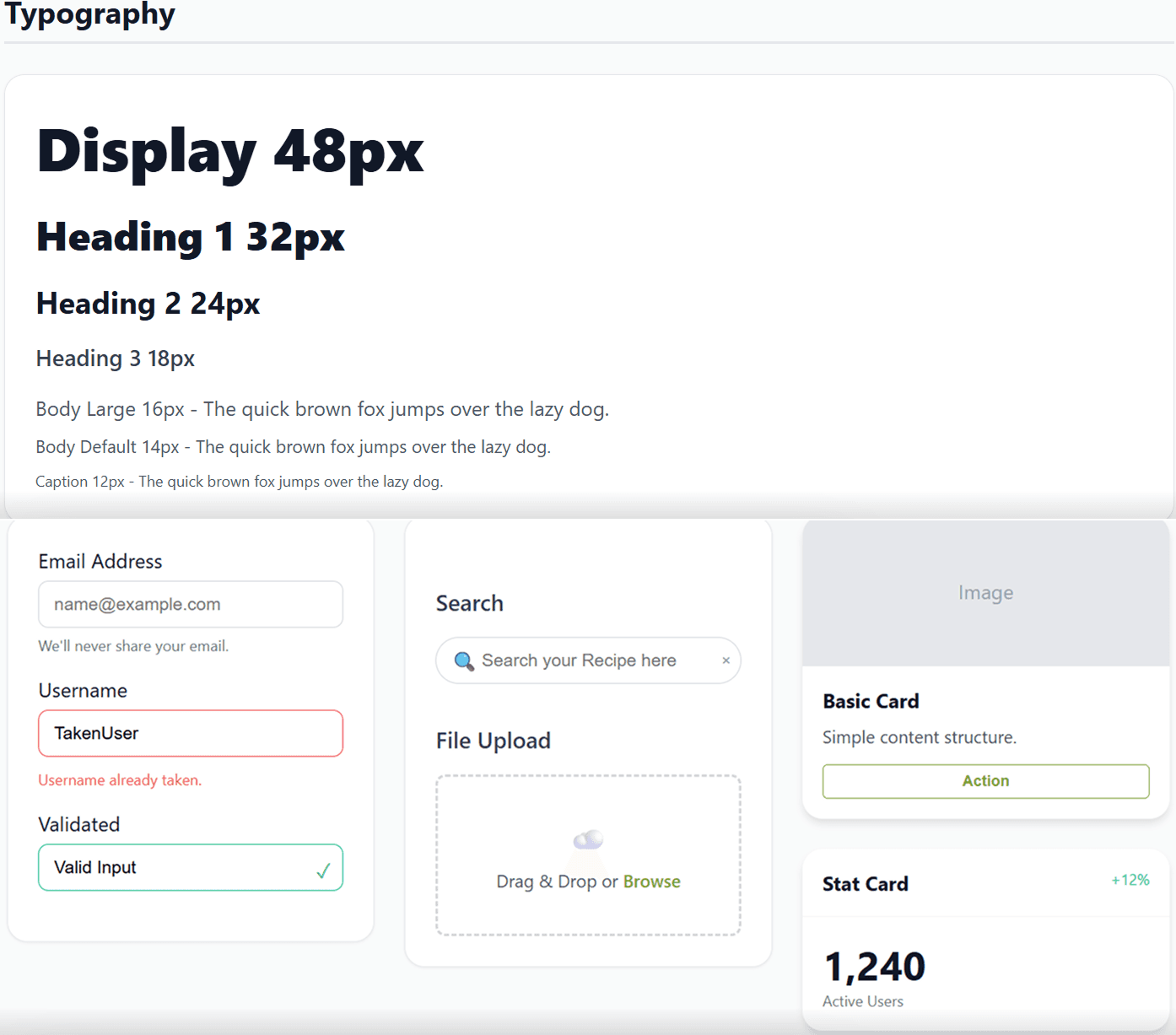
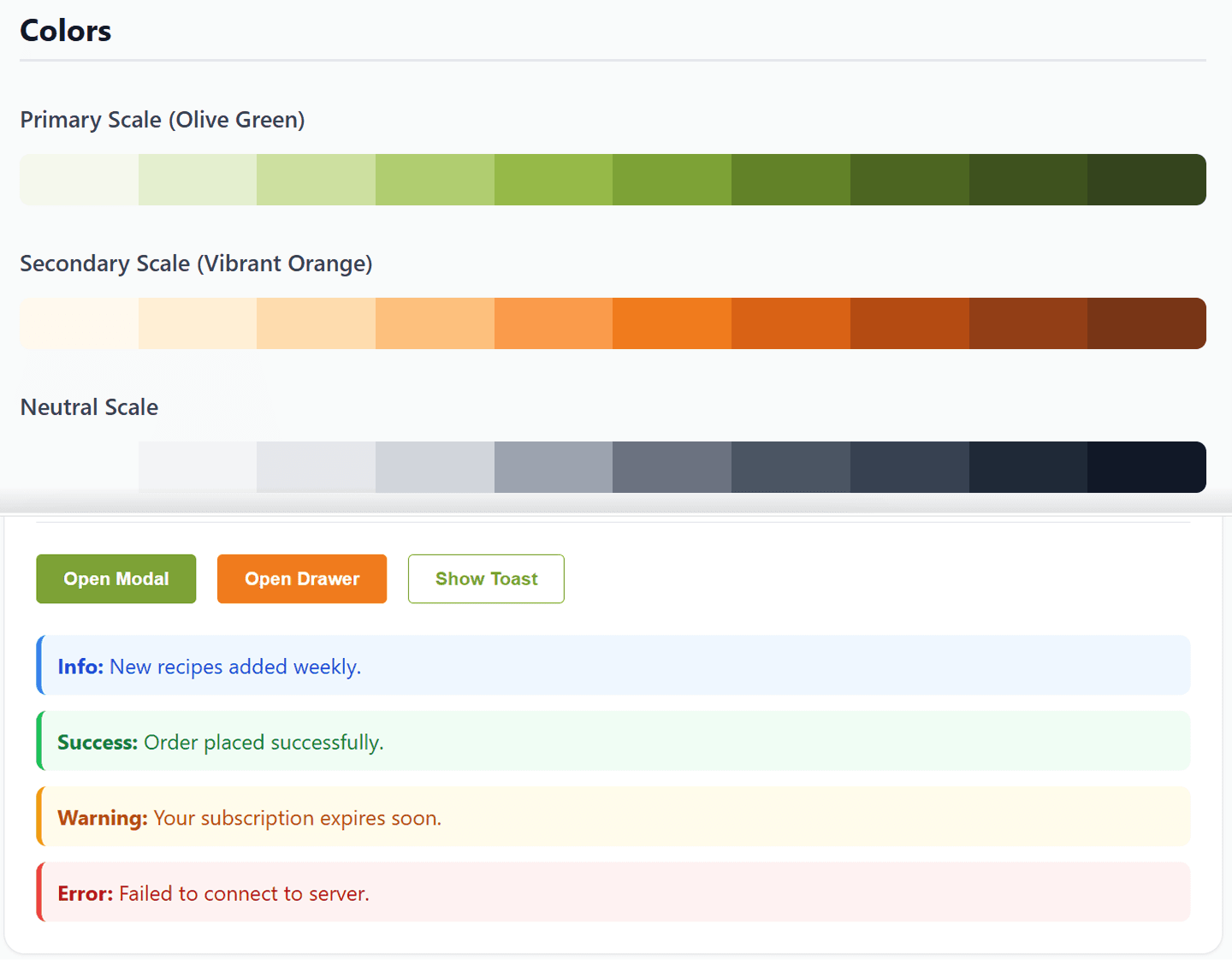
Developed a user-centric Design, considering color contrasts, iconography, and typography to enhance accessibility for users with varying needs.
Create a cohesive, personalized experience that helps users quickly identify allergens and receive relevant substitute recommendations with confidence?
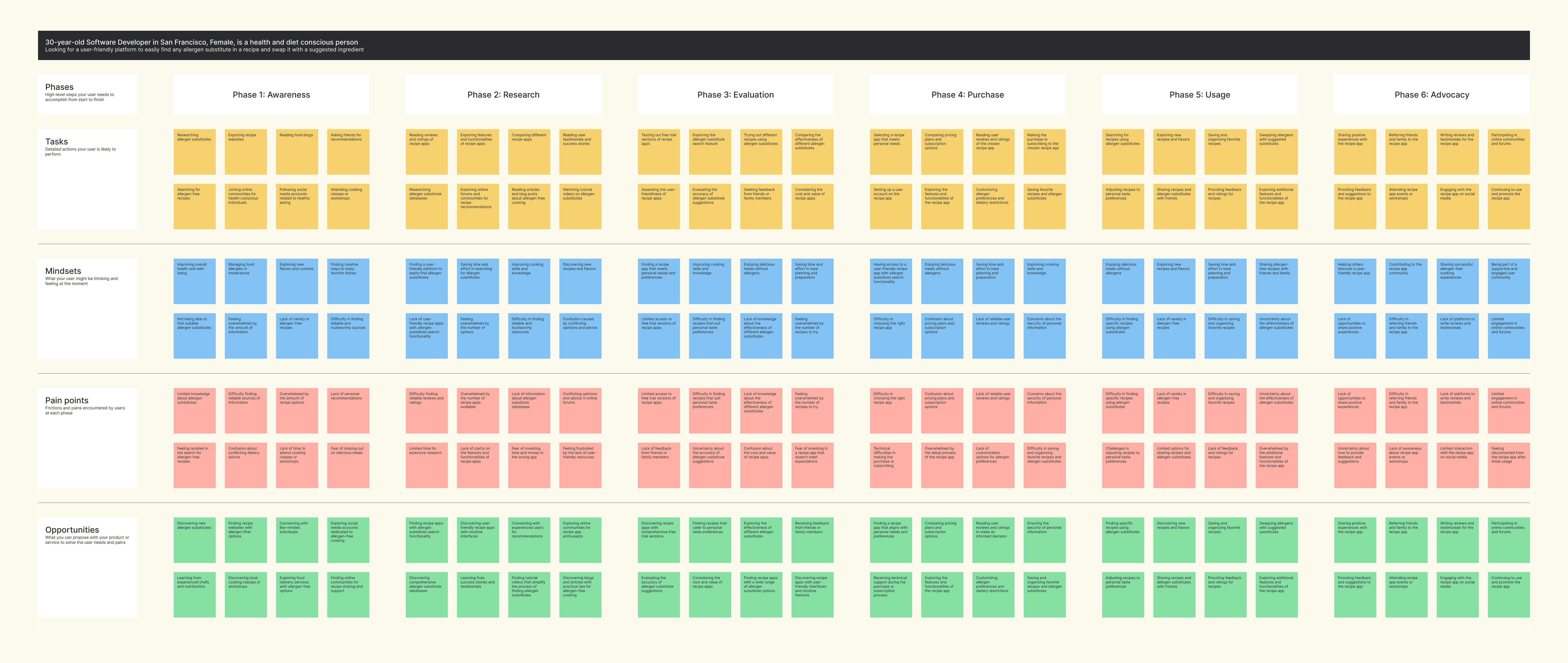
Understanding the user's mental model through brainstorming sessions , Persona development, User Testing.
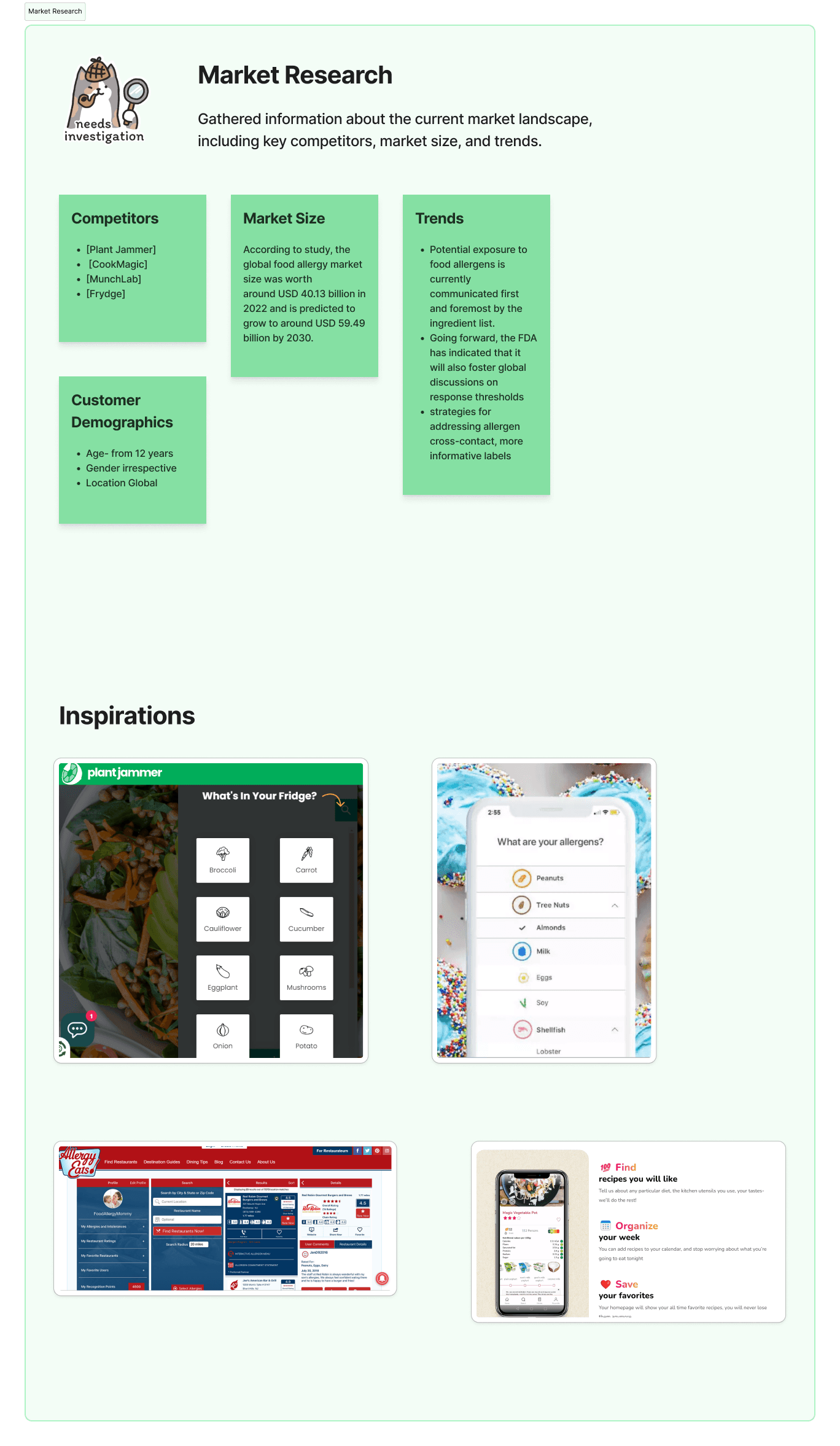
Competitor Analysis
10+ competitors Audited
User Interviews
10 Participants
Usability Tests
6+ Iterations
Key User Needs
Relevance
Will this substitute work for my allergy and my diet?
Does this fit my current recipe ?
• Context-aware, personalized substitute recommendations.
Ease
"Can I use this while cooking?"
Will this disrupt my routine?
- Ease of use
- Low-effort interactions
- Designed for real moments.
Trust
"How do I know this ingredient is actually safe for me?"
“Amount spent on security deposit Case management provided?”
• Clear and reliable allergen identification, free from interpretation overhead.
Belonging
Has someone like me tried this before?
"Am I alone in this?"
Community validation that builds trust and emotional safety.
Lots of back and forth research for this sensitive topic - HEALTH
Implemented iterative design changes based on user feedback, ensuring continuous improvement and alignment with evolving user expectations.
1
Prioritized clarity and explainability over opaque AI automation to ensure users act with confidence in safety-critical moments.
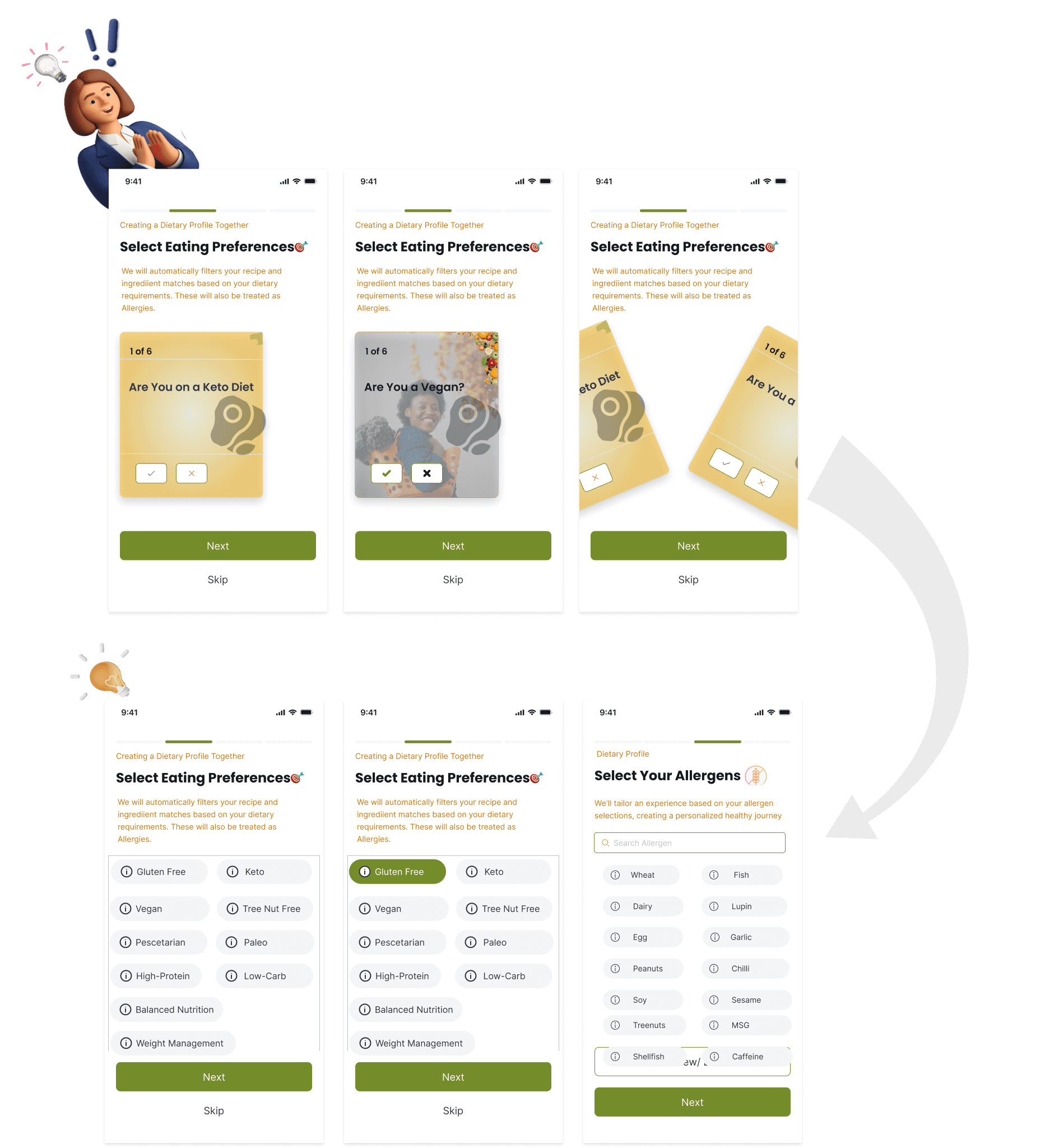
Treated allergy profiles and dietary constraints as the baseline, not an optional setup, to eliminate generic recommendations.
2
Habit & Validation
Designed guided, repeatable interactions to support routine adoption without relearning.
Used community input to reinforce decisions, not replace system intelligence.
Tone - Adopted supportive, non-restrictive language to empower rather than caution-fatigue users.
Clarity - Applied progressive disclosure to surface risk without overwhelming or alarming users.
3
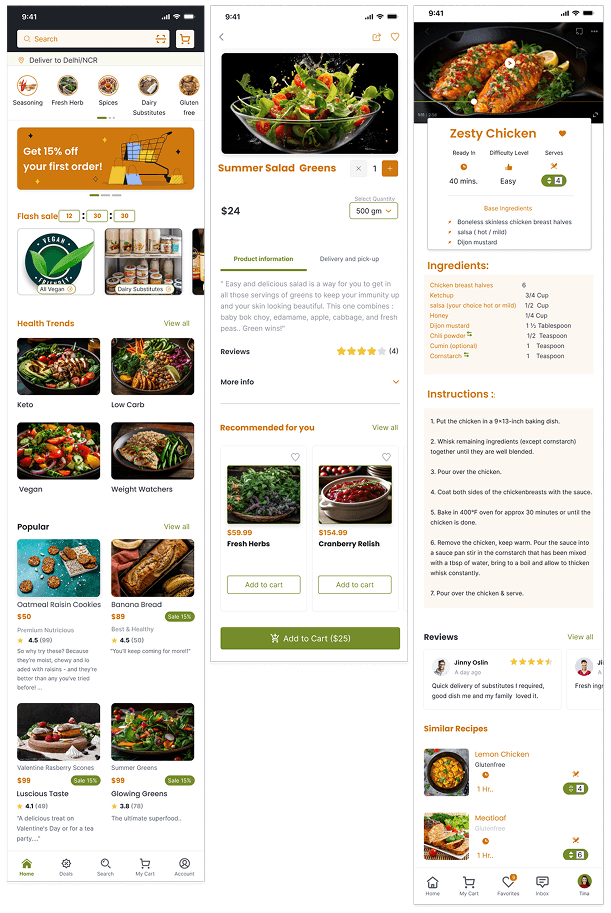
Reduced choices to the safest, most relevant substitutes to minimize decision fatigue during cooking.
Optimized flows for rapid, interruptible use in real kitchen environments.
Outcomes - Measured success through confidence, reduced hesitation, and repeat safe decisions—not clicks.
What did I learn?
Safety played a Key constraint and also a decisive point!!
Allergen-related decisions are health-critical; errors could have real-world consequences, limiting experimentation and visual playfulness.
Fewer, better recommendations increase confidence more than exhaustive choice sets.
Major upgrade was feature addition later to order the substitute with various stores nearby.
Reduced risk and decision fatigue by designing a trust-first, habit-forming experience for allergy-safe cooking.